

How Are Glass Bottles Made?
Have you ever wondered how a pile of raw materials becomes a perfectly formed glass bottle?
The glass bottle manufacturing process combines high-temperature melting, precision engineering, automated forming, heat treatment, quality control, and finishing to produce bottles that are both attractive and functional.
For standard stock bottles, the process is highly optimized for large-scale production. For custom glass bottles, there are additional steps before production begins, including bottle design, engineering, prototype sampling, and custom mold manufacturing.
Whether you're developing a whiskey bottle, gin bottle, vodka bottle, wine bottle, food container, or another type of glass packaging, understanding how bottles are manufactured can help you make better decisions about design, quality, weight, decoration, and cost.
Let's take a closer look at the complete process.
The Glass Bottle Manufacturing Process at a Glance
A typical glass bottle production process involves several key stages:
- Bottle design and engineering
- Raw material preparation
- Glass melting
- Glass conditioning
- Gob formation
- Bottle forming
- Annealing
- Inspection and quality control
- Decoration and finishing
- Packaging and shipping
Each stage contributes to the final quality and performance of the bottle.
1. Bottle Design and Engineering
Before a custom glass bottle can be manufactured, the design needs to be transformed into a production-ready specification.
This is particularly important for custom glass bottles, where the bottle shape, dimensions, weight, neck finish, base, and decorative features are developed specifically for a brand.
Engineers consider factors such as:
- Bottle capacity
- Overall dimensions
- Glass distribution
- Bottle weight
- Base thickness
- Neck finish
- Closure compatibility
- Bottle stability
- Label area
- Embossing requirements
- Decoration
- Filling-line compatibility
- Packaging and transportation
A bottle may look simple, but manufacturing glass consistently requires careful engineering.
A successful design therefore needs to balance visual impact, functionality, manufacturability, and cost.
2. Preparing the Raw Materials
Glass begins with carefully selected raw materials.
The composition depends on the type of glass being produced, but typical container glass is made using materials such as:
- Silica sand
- Soda ash
- Limestone
- Other mineral ingredients
- Recycled glass, known as cullet
These materials are carefully proportioned and prepared before entering the furnace.
The exact composition can influence characteristics such as clarity, color, melting behavior, and final glass performance.
For premium packaging, glass clarity can be particularly important.
3. Melting the Glass
The prepared raw materials are introduced into a high-temperature furnace.
Inside the furnace, the materials are heated until they melt and combine into a homogeneous molten glass.
The furnace operates at temperatures of approximately 1,500°C, although exact conditions vary according to the glass composition and manufacturing process.
At this stage, quality and consistency are critical.
The molten glass needs to have the appropriate temperature and viscosity for the forming process that follows.
4. Conditioning the Molten Glass
After melting, the glass is conditioned before individual portions are sent to the forming machines.
The temperature needs to be carefully controlled so that the glass has the right characteristics for forming.
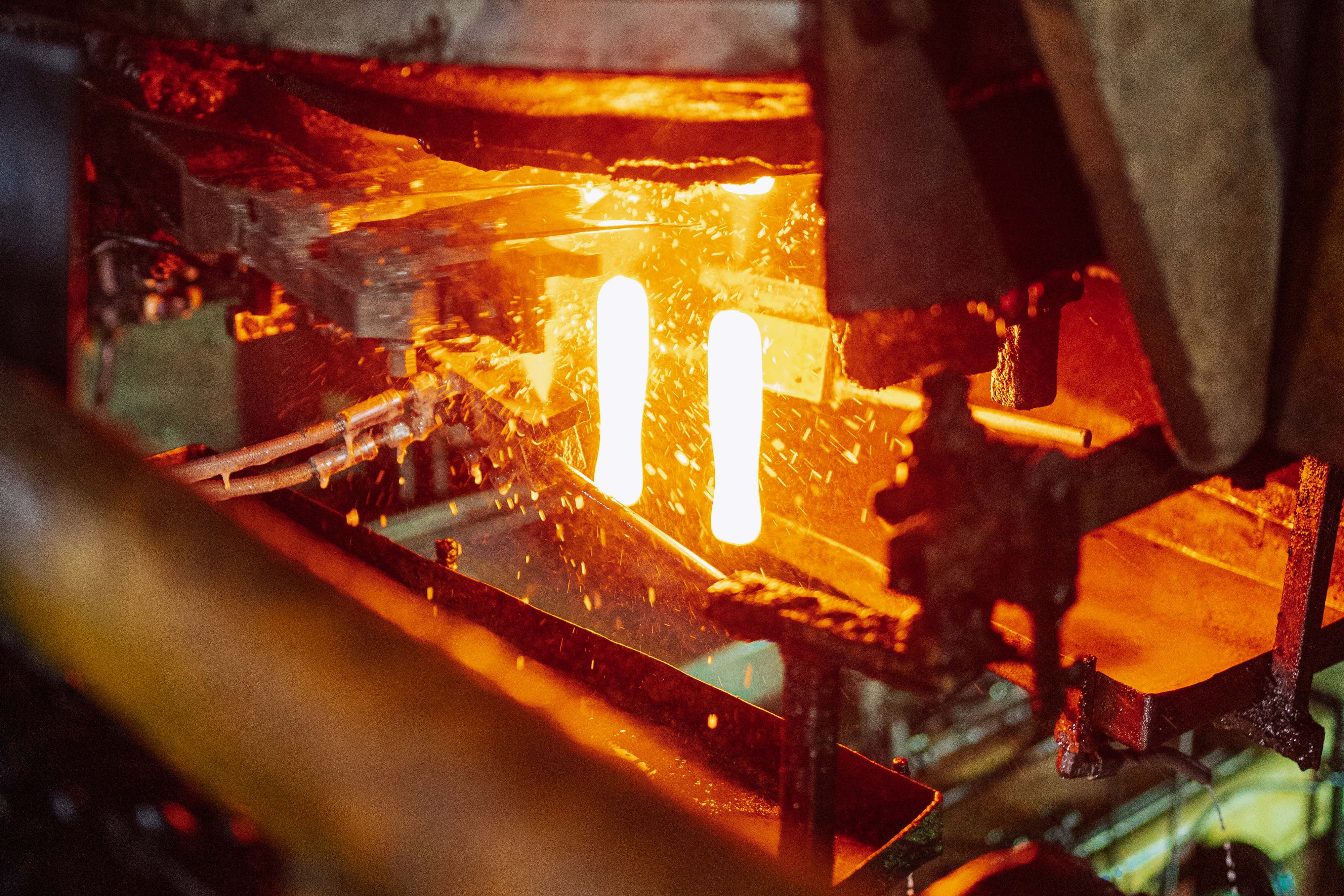
The molten glass is then divided into precisely measured portions called gobs.
The weight of each gob corresponds to the amount of glass required to produce the bottle.
Consistent gob weight is essential for producing bottles with consistent dimensions and weight.
5. Forming the Glass Bottle
This is where the molten glass becomes a bottle.
The gob of molten glass is delivered into a forming machine and shaped using precision molds.
There are two major forming stages commonly used in container glass production:
Blank Molding
The first mold creates a preliminary shape, sometimes called a parison or blank.
This stage establishes important features such as the bottle's neck and initial glass distribution.
Final Molding
The partially formed glass is transferred into the final mold.
Compressed air is then used to push the hot glass against the inside walls of the mold, creating the final bottle shape.
This process happens rapidly and repeatedly, allowing manufacturers to produce large quantities of consistent bottles.
6. Creating the Bottle's Shape and Details
The mold determines many of the bottle's physical characteristics.
This includes:
- Body shape
- Shoulders
- Neck
- Base
- Embossed details
- Bottle dimensions
- Overall silhouette
This is one of the reasons custom bottle molds are so important.
If a spirits brand wants a distinctive bottle shape, raised logo, special base, or unusual silhouette, those features need to be incorporated into the tooling. To see how these choices play out visually on the shelf, take a look at how bottle shape affects brand perception.
A well-designed mold is essential for producing consistent bottles throughout a production run.
7. Annealing: Removing Internal Stress
After forming, the glass is still extremely hot.
Rapidly cooling the bottle could create internal stresses that make the glass more vulnerable to cracking or breaking.
To prevent this, bottles pass through an annealing lehr.
The bottles are gradually cooled in a controlled environment, allowing internal stresses to dissipate.
Annealing is an essential part of the glass bottle manufacturing process because it helps ensure that bottles have the required strength and durability for handling, filling, transportation, and consumer use.
8. Inspection and Quality Control
After annealing, bottles undergo quality inspection.
Depending on the application and manufacturing requirements, inspections can evaluate:
- Dimensions
- Weight
- Glass distribution
- Neck finish
- Cracks
- Surface defects
- Bubbles
- Stones or inclusions
- Distortion
- Base quality
- Overall appearance
Automated inspection systems can identify many defects at high production speeds, while additional quality-control procedures help ensure that finished bottles meet the required specifications.
For premium spirits packaging, cosmetic quality is particularly important because even small visual imperfections can affect the appearance of the finished product.
9. Bottle Decoration
A bottle's appearance can be enhanced further through decoration.
Decoration can be applied during or after the main glass manufacturing process, depending on the technique. Fusion Glassworks' bottle decoration services cover the common methods below.
Embossing and Debossing
Brand names, logos, patterns, and other details can be incorporated directly into the glass.
This creates a tactile feature that can make a bottle feel distinctive and premium.
Serigraphy / Screen Printing
Screen printing can apply text, logos, graphics, and multiple colors directly onto the bottle.
Ceramic Decoration
Ceramic inks can be used to create durable decorative designs on glass.
Frosting
Frosted finishes can create a soft, opaque appearance and change the visual and tactile character of the bottle.
Coatings and Metallic Finishes
Special coatings and metallic effects can create additional visual impact for premium packaging.
Decoration can be a significant part of the overall packaging budget. For highly complex designs, decoration can sometimes cost as much as—or even more than—the glass bottle itself.
10. Packaging the Finished Bottles
Once bottles have passed inspection and any required decoration has been completed, they are prepared for shipment.
Packaging needs to protect bottles during:
- Handling
- Storage
- Transportation
- Loading and unloading
For custom bottles, packaging is especially important because unique shapes and heavier designs may require specially designed cartons or protective systems.
Efficient packaging also helps maximize container and pallet utilization, which can have a meaningful effect on transportation costs.
What Is the Difference Between Stock and Custom Glass Bottle Manufacturing?
The basic glass-forming process is similar for stock and custom bottles, but custom bottles require additional development before production.
A stock bottle already has:
- An established design
- Existing molds
- Known production specifications
- An established manufacturing process
A custom glass bottle requires new development.
This can include:
- Concept development
- Engineering
- Prototype sampling
- Sample approval
- Production mold manufacturing
- Mass production
For a new custom bottle, Fusion Glassworks' typical timeline is approximately:
- Sampling: 6 weeks
- Production molds: 5 weeks
- Mass production: 6–8 weeks
This means the manufacturing stages can take approximately 17–19 weeks, excluding shipping and other project-specific requirements. For a full breakdown of each phase, see how long it takes to manufacture custom glass bottles.
Planning ahead is therefore essential when developing custom spirits packaging.
How Glass Quality Affects Bottle Manufacturing
Not all clear glass looks exactly the same.
For premium packaging, different levels of glass clarity can be selected depending on the desired appearance and budget.
Common categories include:
Standard Flint
A practical and cost-effective option for many beverage and spirits applications.
Super Flint
Provides a higher level of clarity and a more premium appearance.
Extra Flint
Offers exceptional brilliance and transparency and is often selected for luxury spirits packaging.
The appropriate glass quality depends on your product positioning, bottle design, budget, and desired visual effect.
How Bottle Weight Affects Manufacturing
Bottle weight is another important consideration.
A heavier bottle requires more glass, which can increase:
- Material consumption
- Manufacturing costs
- Transportation costs
- Packaging requirements
Heavy bases are common in premium spirits packaging because they can create a substantial, luxurious feel.
However, adding weight should be a deliberate design decision rather than simply making the bottle as heavy as possible.
Good bottle engineering aims to create the desired appearance and tactile experience while using glass efficiently.
How Custom Bottle Molds Work
The mold is one of the most important components of custom bottle production.
It determines the shape and many of the details of the finished bottle.
For a new custom project, a sample mold is first used to produce prototype bottles. Once the design has been approved, production molds are manufactured for the full production run.
Production molds generally take approximately five weeks to manufacture after sample approval.
Because molds are such an important investment, careful design and engineering before tooling begins can help prevent costly changes later.
What Determines the Cost of Manufacturing a Glass Bottle?
The final cost of a custom glass bottle depends on several factors.
Glass Quality
Standard flint is generally more economical than super flint or extra flint.
Bottle Weight
A heavier bottle uses more glass and costs more to manufacture and transport.
Bottle Complexity
Intricate shapes, unusual dimensions, embossing, and complex bases may increase engineering and tooling costs.
Decoration
Screen printing, embossing, frosting, ceramic decoration, metallic effects, and specialty finishes can significantly affect the final price.
Production Quantity
Larger production runs can generally reduce the cost per bottle by spreading tooling and setup costs over more units.
For example, a standard-flint 750ml custom bottle produced at a minimum order quantity of around 20,000 units might start at approximately US$0.90 per bottle, while premium extra-flint bottles can be around US$1.30 or more, depending on weight and specifications.
A heavier 750ml extra-flint bottle without decoration may be closer to US$1.60 per bottle.
These figures are illustrative rather than fixed prices, as actual costs depend on the individual project and market conditions. For a closer look at what drives these numbers, see how much a custom glass bottle costs.
Why Quality Control Matters in Glass Bottle Production
Glass bottles need to look good, but they also need to perform.
A bottle may need to withstand:
- Filling
- Capping
- Handling
- Transportation
- Storage
- Temperature changes
- Consumer use
Quality control throughout manufacturing helps identify defects and maintain consistency across large production runs.
For brands producing thousands or hundreds of thousands of bottles, consistency is particularly important.
Every bottle needs to look and perform like the one before it. Consistent quality also depends on getting the closure right—explore Fusion Glassworks' bottle closures to see how bottle and closure are engineered together.
How Long Does Glass Bottle Manufacturing Take?
For stock bottles, production can be relatively straightforward because the molds and manufacturing process already exist.
Custom bottles require significantly more development.
A typical new custom glass bottle project may include:
- 6 weeks → Sampling
- 5 weeks → Production molds
- 6–8 weeks → Mass production
Total: approximately 17–19 weeks.
Shipping, decoration, approvals, design development, and other project-specific requirements may add additional time.
For this reason, brands should begin packaging development well ahead of their planned product launch. If you're still finalizing your design, it's also worth reviewing 10 mistakes to avoid when designing a liquor bottle, since design changes made after tooling begins can add weeks to this timeline.
Choosing the Right Glass Bottle Supplier
Selecting a manufacturing partner is an important decision.
Look for a supplier that can support you through the entire process, including:
- Bottle design
- Engineering
- Sampling
- Mold development
- Glass selection
- Production
- Decoration
- Quality control
- Packaging
- Logistics
An experienced custom glass bottle supplier can help identify potential problems before production begins and recommend solutions that balance appearance, performance, and cost.
From Concept to Finished Bottle
The glass bottle manufacturing process combines centuries-old glassmaking principles with modern engineering, automation, and quality control.
For custom packaging, the process begins long before molten glass enters the production line.
It starts with an idea.
That idea is developed into a technical design, transformed into prototype bottles, refined through sampling, and eventually brought into mass production using precision tooling.
The result is a finished glass bottle designed not only to contain a product but also to communicate the identity of the brand.
Frequently Asked Questions
How are glass bottles manufactured?
Glass bottles are manufactured by melting raw materials at high temperatures, forming molten glass into bottles using molds, annealing the finished bottles, inspecting them for defects, and applying decoration or finishing when required.
What is the glass bottle manufacturing process?
The main stages include raw material preparation, melting, conditioning, gob formation, bottle molding, annealing, inspection, decoration, and packaging.
How are custom glass bottles made?
Custom bottles require additional steps before mass production, including design, engineering, prototype sampling, custom mold manufacturing, and sample approval.
How long does it take to manufacture a custom glass bottle?
A typical custom project requires approximately 17–19 weeks for sampling, production mold manufacturing, and mass production. Shipping and other project-specific stages are additional.
What is a glass bottle mold?
A glass bottle mold is precision tooling used to shape molten glass into the desired bottle design. Custom bottles require molds specifically designed for their unique shape and features.
What is flint glass?
Flint is a clear container glass. Standard flint, super flint, and extra flint represent different levels of clarity and visual quality used for various packaging applications.
Does bottle weight affect the price?
Yes. Heavier bottles require more glass and generally cost more to manufacture. They can also increase transportation and packaging costs.
Can glass bottles be decorated?
Yes. Glass bottles can be decorated using techniques including embossing, debossing, serigraphy or screen printing, ceramic decoration, frosting, coatings, and metallic finishes.
Create Your Custom Glass Bottle with Fusion Glassworks
A successful custom bottle requires more than an attractive design.
It requires engineering, precision manufacturing, quality control, and careful planning at every stage of the process.
Fusion Glassworks works with brands to develop and manufacture custom glass bottles for spirits, beverages, and other premium products. From the initial concept and prototype through mold development, mass production, and decoration, our team can help turn your packaging vision into a finished bottle.
Whether you're developing a new whiskey bottle, gin bottle, vodka bottle, rum bottle, tequila bottle, or another premium glass package, understanding the manufacturing process is the first step toward creating packaging that looks exceptional and performs reliably.
Ready to develop your custom glass bottle? Contact Fusion Glassworks to discuss your project, specifications, production quantity, and timeline.