

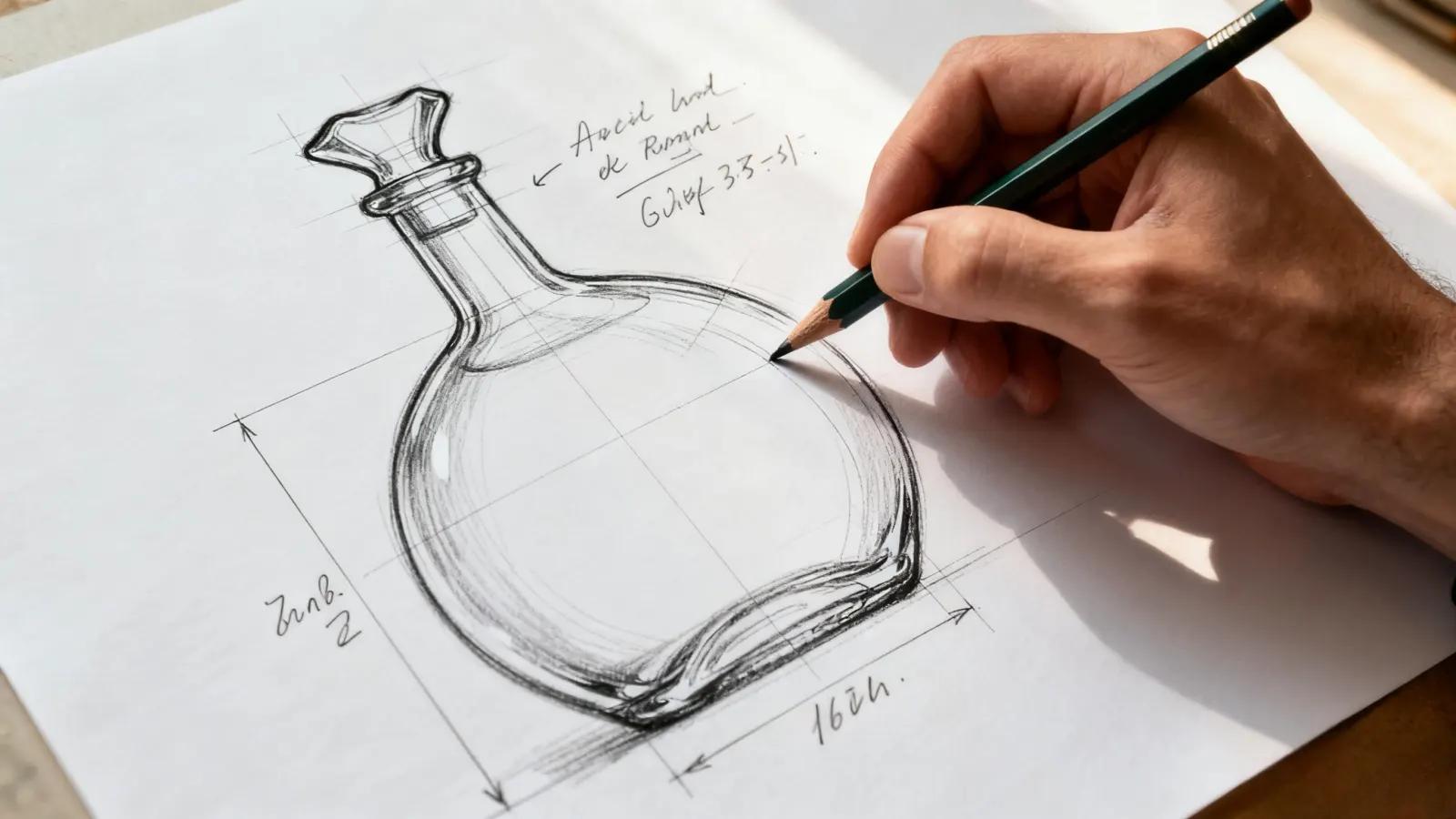
A liquor bottle is much more than a container—it's one of the most powerful marketing tools your brand has.
Before a customer tastes your whiskey, vodka, gin, rum, or tequila, they judge it by its packaging. An eye-catching bottle can communicate premium quality, craftsmanship, and brand identity within seconds.
However, creating a successful custom liquor bottle requires more than an attractive sketch. Every design decision affects manufacturing costs, production timelines, filling efficiency, shipping, and ultimately, your brand's success. Before you start sketching, it's worth browsing examples of Custom Glass Bottles for inspiration.
Here are the 10 most common mistakes to avoid when designing a custom liquor bottle.
1. Designing for Looks Instead of Manufacturability
Some bottle concepts look incredible on paper but are difficult—or impossible—to manufacture efficiently.
Extreme curves, sharp transitions, very narrow sections, or highly complex shapes can create production challenges that increase costs and extend lead times.
The best bottle designs combine creativity with sound engineering.
2. Choosing the Wrong Glass Quality
Not every premium product requires the highest-grade glass.
The three most common options are:
- Standard Flint
- Super Flint
- Extra Flint
Extra flint glass offers exceptional clarity and brilliance but comes at a higher cost. Standard flint may be perfectly suitable for many brands while helping control packaging expenses.
Selecting the right glass quality should balance aesthetics, budget, and brand positioning.
3. Making the Bottle Heavier Than Necessary
Many luxury spirits feature heavy-base bottles because they feel premium in the consumer's hand.
While weight can enhance perceived value, it also increases:
- Manufacturing costs
- Raw material usage
- Freight costs
- Carbon emissions
Modern engineering can often achieve a premium appearance with a lighter, more sustainable bottle.
Remember: heavier isn't always better.
4. Ignoring Production Costs
Every design feature has a manufacturing cost.
Examples include:
- Deep embossing
- Thick glass bases
- Custom neck finishes
- Unusual bottle shapes
- Complex decoration
A spectacular bottle is only valuable if it fits your commercial objectives.
Always design with your target retail price and packaging budget in mind. For a full breakdown of what drives pricing, see our guide: How Much Does a Custom Glass Bottle Cost?
5. Forgetting About Decoration
Many brands focus entirely on the bottle shape and only think about decoration later.
In reality, decoration is often what transforms a good bottle into an unforgettable one.
Options include:
- Embossing
- Debossing
- Screen printing (serigraphy)
- Frosting
- Ceramic printing
- Metallic finishes
- Spray coating
- Premium labels
In some luxury projects, decoration can even cost more than the bottle itself.
Planning decoration from the beginning ensures the bottle is designed to showcase these features effectively. See our full range of Bottle Decoration Services.
6. Overcomplicating the Design
Some of the world's most recognizable spirits bottles are surprisingly simple.
Adding too many decorative elements can make a bottle appear busy rather than premium.
A clean silhouette combined with carefully selected decoration often creates a stronger shelf presence than excessive detailing.
Good design is about balance—not complexity.
7. Ignoring Filling Line Compatibility
A beautiful bottle still needs to work efficiently during production.
Bottle dimensions, neck finishes, stability, and tolerances all affect compatibility with filling and packaging equipment.
Ignoring these technical requirements can result in costly modifications later.
Working with experienced engineers helps avoid production issues before they occur.
8. Choosing the Wrong Closure
The closure is part of the overall customer experience.
Whether you select:
- Natural cork
- Synthetic cork
- Bar-top closure
- Screw cap
- Luxury stopper
it should complement both the bottle design and the positioning of your brand.
The bottle and closure should always be designed together rather than independently. Browse our full range of Bottle Closures.
9. Underestimating Development Time
Custom glass bottles cannot be produced overnight.
A typical project includes:
- Design
- Engineering
- Prototype sampling
- Production mold manufacturing
- Mass production
Planning several months ahead gives your team enough time to refine the design, approve samples, and prepare for launch without unnecessary pressure. For the full breakdown, see: How Long Does It Take to Manufacture Custom Glass Bottles?
10. Designing Without Thinking About Your Brand Story
Your bottle should instantly communicate your brand personality.
Ask yourself:
- Is your brand modern or traditional?
- Luxury or approachable?
- Minimalist or bold?
- Craft or heritage?
Every design element—from bottle shape to decoration and closure—should reinforce the story you want customers to remember.
Great packaging creates an emotional connection before the first sip.
Bonus Tip: Think Beyond the Bottle
The bottle is only one part of your packaging.
Consider how it works alongside:
- Labels
- Gift boxes
- Capsules
- Cartons
- Shipping packaging
- Retail displays
A consistent packaging system creates a stronger premium brand experience.
Frequently Asked Questions
What makes a good liquor bottle design?
A successful liquor bottle combines attractive aesthetics with practical manufacturing, efficient filling, strong branding, and cost-effective production.
Should I choose a heavy bottle?
Heavy bottles create a premium feel but increase manufacturing and shipping costs. The best choice depends on your brand positioning and budget.
Is extra flint glass worth the investment?
Extra flint glass offers exceptional clarity and is ideal for premium spirits where presentation is a key selling point.
When should decoration be planned?
Decoration should be considered during the initial design stage to ensure the bottle is optimized for embossing, screen printing, labels, or other finishing techniques.
How long does it take to develop a custom liquor bottle?
A typical project requires approximately 17–19 weeks for sampling, mold manufacturing, and mass production, excluding shipping and logistics.
Final Thoughts
Designing a custom liquor bottle is an investment in your brand's future. The most successful bottles don't just look impressive—they are engineered for efficient manufacturing, optimized for decoration, and designed to create a lasting impression on consumers.
By avoiding these common mistakes, you can reduce production costs, shorten development timelines, and create packaging that truly stands out on the shelf.
At Fusion Glassworks, we help spirits brands transform ideas into premium custom glass bottles. From concept development and engineering to sampling, mold manufacturing, decoration, and production, our experienced team supports every stage of the process.
Whether you're launching a craft gin, premium whiskey, luxury vodka, tequila, rum, or another spirit, we're here to help you create packaging that reflects your brand and captivates your customers. Contact Us to get started.